
Screenless Health Wearables
Present on the body.
Quiet in the day.
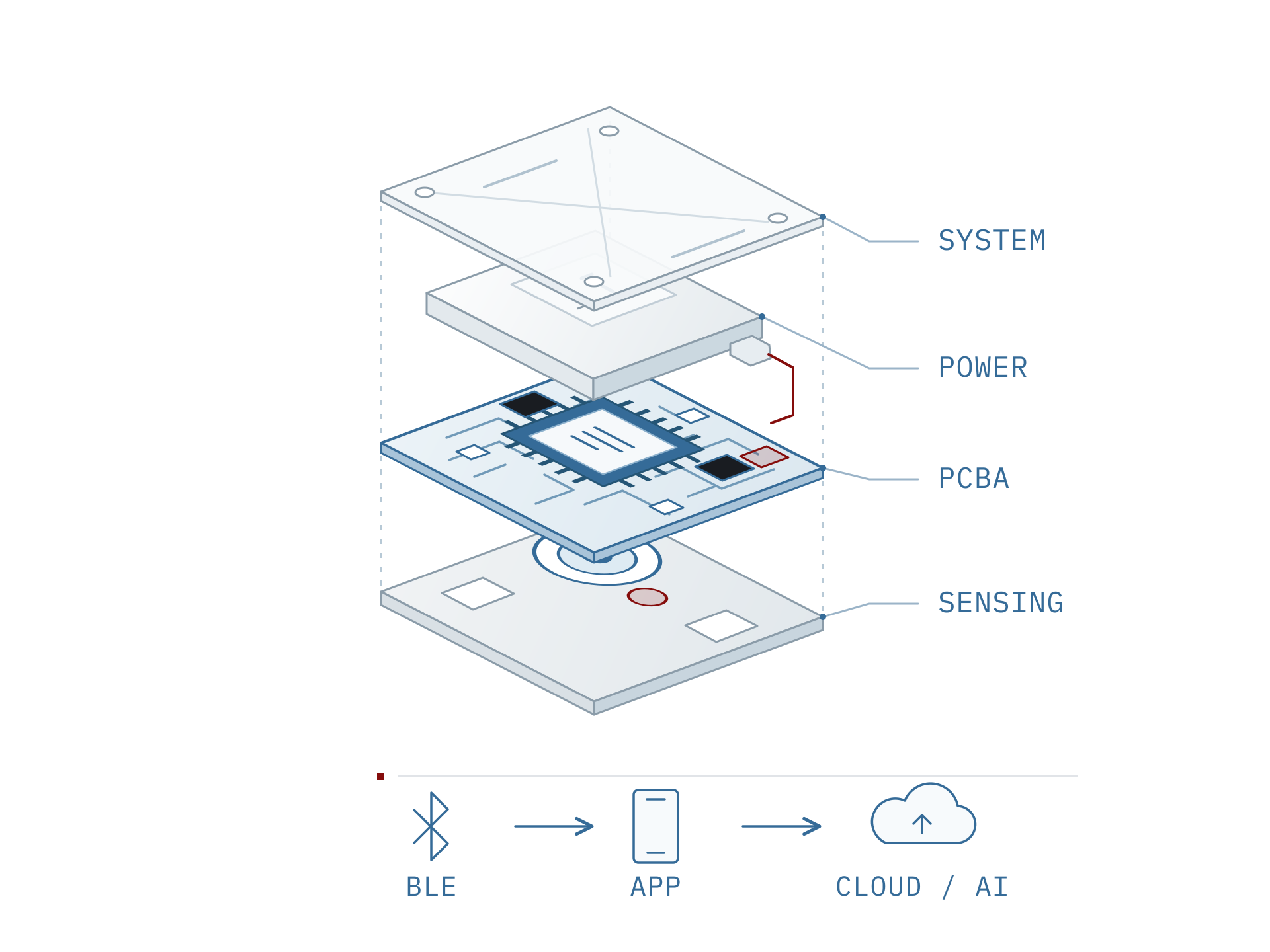
Hulin develops screenless health wearable systems across sensing, PCBA, firmware, BLE and connected software. Wrist, ring and other body-worn architectures are shaped around the product brief, continuous sensing and comfortable long-term wear.
Removing the main display changes how space, power and interaction are allocated. Sensing, local storage and low-interruption wear need to be planned together with the app experience.
Start a ProjectDesigned around wearing
The connection
is physical.
A wristband meets the body through its strap and enclosure; a ring through its size and inner surface. Fit, movement and the sensor’s relationship to the skin are considered together.
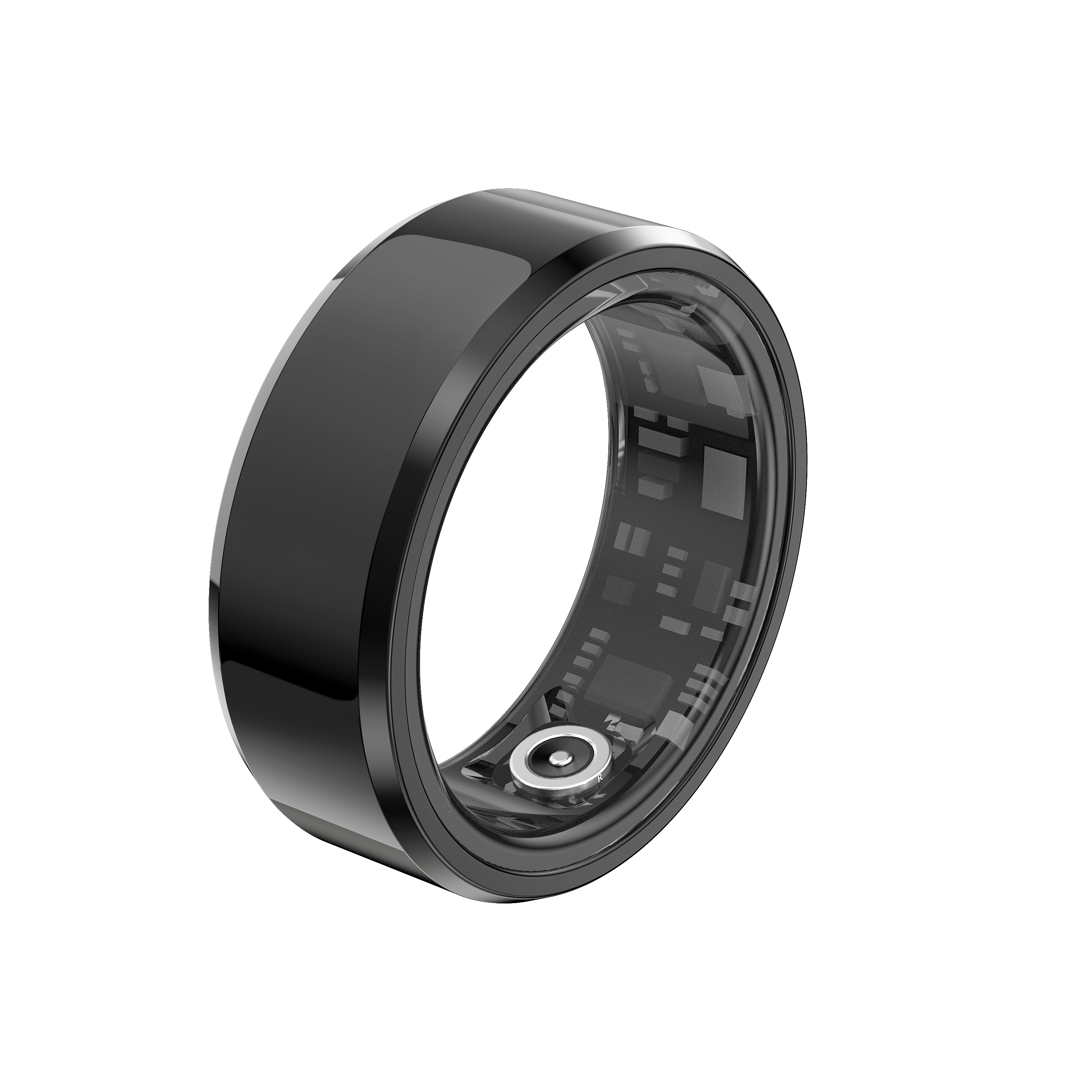
Wristband or ring.
Fit comes first.
The form changes how contact is maintained. Strap adjustment, ring sizing and enclosure geometry influence how the device moves with the wearer.
Mechanical integration, sensor placement and wearing conditions need to be evaluated as one system.
Signal starts at the body
At the skin.
Inside the system.
- Skin contact
- Sensing interface / window
- Sensing layer
- Sensor package
- PCBA
- Enclosure integration
Optics, contact
and movement.
PPG development brings optical openings, sensor placement, light paths and ambient-light control into the mechanical design. Skin temperature, an IMU and ECG contact arrangements can be evaluated where the product brief calls for them.
Electronics in context.
The sensing stack is integrated with a compact PCBA, processing, memory, BLE, battery and charging interfaces. Firmware coordinates acquisition and data-quality checks within the mechanical and power constraints of the project.
The engineering of continuity
A smaller interruption.
A more complete record.
Continuous-sensing products must account for changing contact, available power and time away from the phone. Continuity is designed across these conditions.
- 01Contact
- Evaluate fit and sensing conditions during rest and movement.
- 02Sense
- Coordinate sensor activity with the information the product needs.
- 03Process
- Plan firmware tasks and signal checks around the available resources.
- 04Buffer
- Preserve observations and timing when a phone is unavailable.
- 05Synchronize
- Move available data through BLE while accounting for interruptions.
- 06App / data
- Keep records and device state understandable across the connected experience.
Power is a shared budget.
Low-power architecture is a system decision. Sensor activity, processing, memory writes, radio scheduling and sleep / wake behavior must work within the battery and wearing requirements. Sampling strategies and data-quality checks are evaluated together; battery life is established through product-specific testing.
- Sleep
- Sample
- Process
- Store
- Sync
- Sleep
The experience continues beyond the device
Quiet hardware.
Context when it matters.
Hulin connects wearable firmware and BLE with mobile apps, backend services and cloud integration. Device binding, synchronization, settings and updates support the day-to-day experience. Health algorithms and AI workflows can be integrated around the supported data, agreed use cases and product-specific validation.
- Wearable
- BLE
- App
- Backend / cloud
- Data / AI
One development path
From brief to integration.
From product definition to prototype integration, validation and manufacturing transfer, Hulin brings the electronics, mechanics and software work into one development path.
- Define
- Prototype
- Validate
- Transfer
Let’s build what comes next
Your next wearable. Together.
Tell us what you’re developing and where you need engineering support.
Submit your project details securely to Hulin. You can also keep a copy of your brief.
Your brief is ready
Review your brief, then open an email draft. Nothing is sent until you send it from your email app.