
APEC and the AI Hardware Opportunity: Building Beyond the App Screen
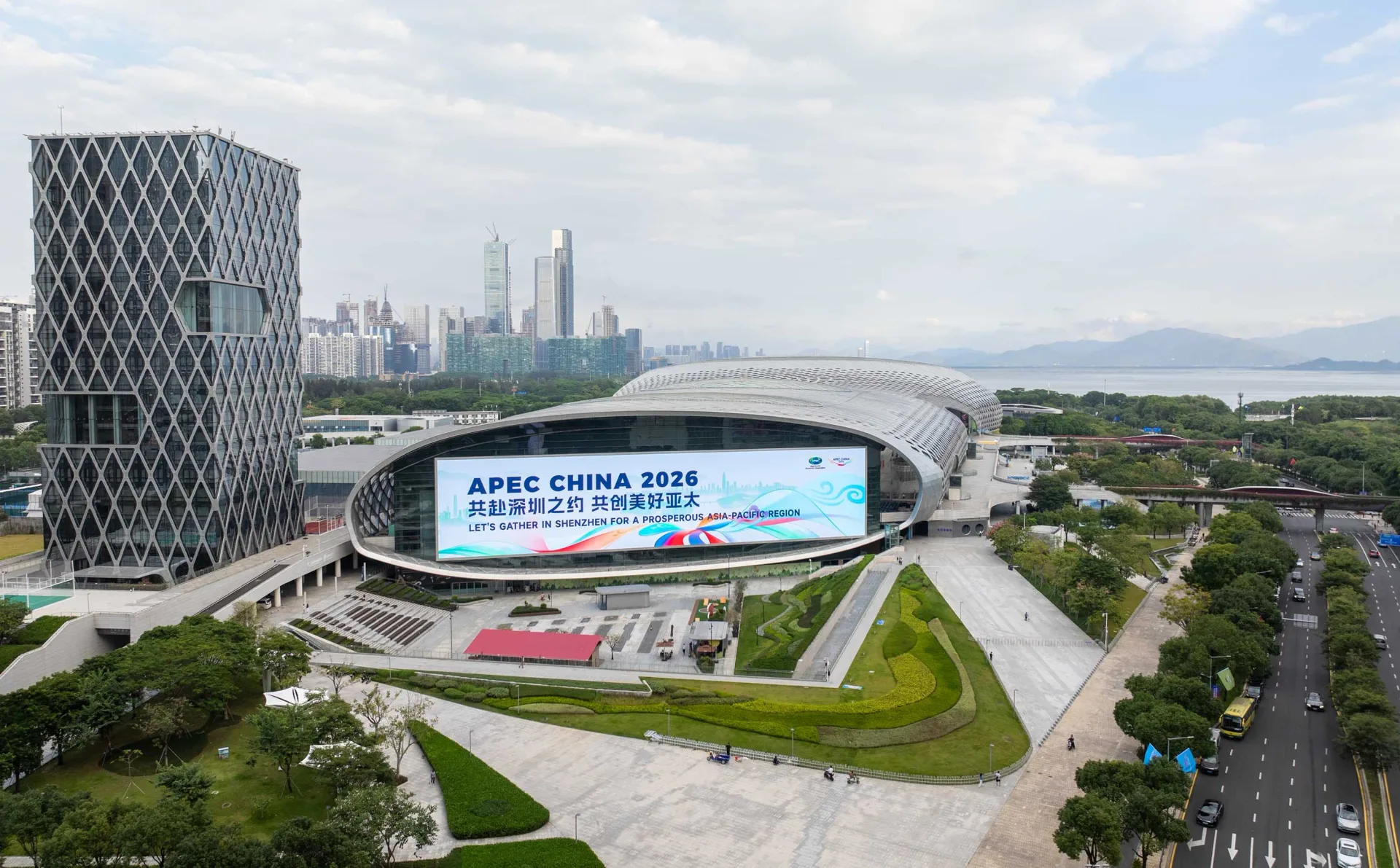
After APEC, your next AI hardware product could start in Shenzhen.
Perhaps you have an idea for something people can carry or wear. Perhaps your company already has software, a brand, or distribution channels and is looking for its next product. Or perhaps you have a budget and need a team that can connect development with manufacturing.
Any of these can be a starting point. Your understanding of customers and markets can work alongside Shenzhen’s engineering expertise and manufacturing ecosystem from day one.
Find a Supply Chain That Works Together for Your Product
Hardware development often comes down to small, practical tasks: sourcing the right battery, revising a circuit board, and getting new components into an engineer’s hands.
In Huaqiangbei, even that process has dedicated services. One local delivery operator described collecting components from 35 specialist markets within a one-kilometer radius. Couriers pick up parts against a bill of materials and consolidate deliveries in as little as half an hour.[1]
When components, suppliers, and engineers are close together, the next prototype test may begin sooner. For a team making repeated design changes, that proximity matters in everyday development.
This is supported by Shenzhen’s industrial base. In 2025, the city’s gross output of industrial enterprises above designated size reached RMB 5.44 trillion. In 2024, R&D spending reached RMB 245.31 billion, with enterprises accounting for more than 93% of the total.[2][3] Manufacturing capacity and industry-led R&D reinforce one another.
Zoom in on smart glasses. A preliminary mapping by Bao’an District in 2026 identified around 60 businesses across that value chain, from batteries and hinges to device manufacturing, system integration, and brands.[4]
For your project, that means specialized teams can work around one product goal. Fit, weight, battery life, and cost can be considered together, while design changes can be discussed with suppliers and manufacturing partners.
Start With an Idea, Not a Fully Built Hardware Team
You do not need an in-house hardware department to start the conversation. Begin with the problem you want your product to solve.
You know your customers, use cases, and target price. A development partner can help turn those insights into a product concept, feature scope, and engineering plan. Shenzhen teams can build early prototypes using established modules or work from product definition through circuit, mechanical, and power design.[5]
A first working prototype makes decisions tangible. Does it feel right in the hand or on the body? Is the interaction intuitive? Does its core feature actually help? The answers guide the next round of development and investment.
The path to international delivery also has a large industrial foundation. Shenzhen exported approximately RMB 2.74 trillion in goods in 2025, with high-tech products accounting for 46.6% of exports.[6]
The key for your business is finding one lead partner who understands the product and keeps engineering, testing, and manufacturing preparation moving toward the same goal.
For wearable products, Hulin can join from product definition and coordinate development, prototype validation, and manufacturing preparation within a single project.
Our engineering work covers mechanical integration, electronics, and embedded firmware, with mobile apps, backend services, and AI integration where the product requires them. We coordinate industrial design, manufacturing, and supply-chain activities with specialist partners.[7]
Your first discussion can begin with your customers, your idea, budget, and target schedule. Together, we can define a practical scope and move through design, prototypes, and validation before production preparation.
That is the value of a one-stop development relationship: you stay involved in the product and business decisions while a lead team coordinates the specialists needed to bring it to life.
Turn Shenzhen’s Capabilities Into a Product of Your Own
Everyone still has only 24 hours in a day. Good AI hardware can help people accomplish useful tasks while working, moving, or talking—reducing extra steps, capturing information, and delivering assistance when it matters.
With informed consent for the intended uses, relevant real-world inputs and feedback may also support better products and, where appropriate, model evaluation or training.
A device people choose to use and trust can become an enduring connection between your brand and its customers. Reliable hardware, helpful software, and a deep understanding of real use cases can become a meaningful competitive advantage over time.
Shenzhen offers the engineering and manufacturing relationships that can take such an idea toward a physical, validated, deliverable product.
APEC may have introduced you to Shenzhen’s possibilities. Your next step could be to bring your idea into this ecosystem—and make it a product of your own.
Tell us what kind of wearable you want to build.
Sources / 参考资料
Public-source references for the stated figures and examples.
[1] RTHK — Huaqiangbei component sourcing and delivery (16 Nov 2026)
https://news.rthk.hk/rthk/en/component/k2/1877984-20261116.htm
[2] Shenzhen Municipal Government — 2025 industrial output
https://www.sz.gov.cn/cn/xxgk/zfxxgj/zwdt/content/post_12640489.html
[3] Shenzhen Municipal Government — 2024 R&D spending
https://www.sz.gov.cn/zfgb/2026/gb1409/content/post_12737773.html
[4] Shenzhen Municipal Government — Bao’an smart-glasses industry chain
https://www.sz.gov.cn/cn/xxgk/zfxxgj/gqdt/content/post_12974916.html
[5] 21st Century Business Herald — Shenzhen prototyping and development interviews (20 Nov 2026)
https://m.21jingji.com/article/20261120/f5a07d985a665b32cccf8316e2c063c5.html
[6] Shenzhen Statistics Bureau — 2025 exports
https://tjj.sz.gov.cn/gkmlpt/content/12/12803/post_12803919.html
[7] Hulin official website — product development and integrated software services
https://www.szhulin.com/en/engineering/product-development/